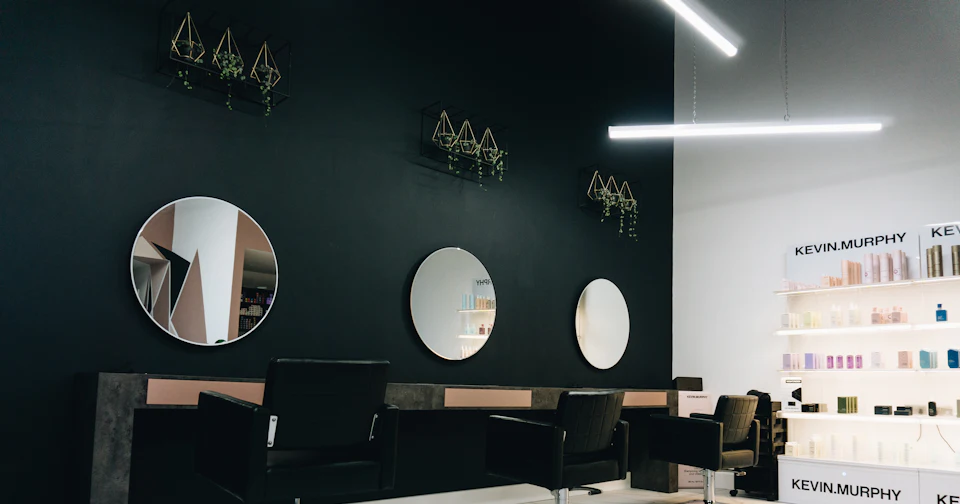
Local SEO for salons is what decides who gets the chair when someone in Naples needs a new colorist, a fresh set of lashes, or a last-minute blowout before a Gulf-front wedding. They pull out their phone and search, and the salon that shows up first, looks polished, and lets them book in two taps usually wins, regardless of who has been in business longer. Across Southwest Florida, beauty clients want confidence in the work before they ever commit to an appointment. This guide walks through the specific moves that get a salon or beauty business found in local search, from the service pages that rank to the booking links and galleries that turn a curious scroller into a confirmed appointment. It all fits inside our complete local SEO guide for Naples businesses.
Why Salon Searches Are Won Locally, Not Globally
Nobody in Bonita Springs is searching for the best balayage on earth. They are searching for the best balayage near them, today, that they can actually get into. That is what makes salon marketing fundamentally a local game: your competition is not a national brand, it is the three other studios within a ten-minute drive. Google knows this, which is why it leans heavily on proximity, relevance, and reputation when it decides which salons to surface for a beauty search.
Your website is the foundation that everything else stands on, even when the booking happens through a third-party platform. A strong, fast, clearly local site tells Google you are a real business serving a real area, and it reassures the visitor who clicks through from the map. If you want the deeper reasoning behind why the site comes first, we lay it out in why local SEO starts with your website, and the same principles shape how we approach web design for beauty businesses across Southwest Florida.
Build a Service Page for Every Treatment You Want to Be Found For
Most salons cram every service onto one long page and wonder why they never rank for anything specific. The problem is that a single page cannot be the best result for balayage, keratin treatments, bridal makeup, and gel manicures all at once. People search for treatments by name, so each meaningful service deserves its own page that explains what it is, who it is for, roughly how long it takes, what to expect, and how the price tends to work.
These pages do double duty. They give Google a clear, focused target to rank for a specific search like "keratin treatment Naples," and they answer the real questions a nervous first-timer has before they commit. A bride deciding where to book trial makeup wants to know your process, not scroll past forty other services to find it. We go deep on structuring these in service pages that rank, and the same craft applies whether you offer hair, nails, skin, lashes, or brows.
If a nearby salon with fewer reviews keeps appearing above you, the explanation is usually one of the five factors that outrank review count.
- Name the page after the treatment exactly as clients say it, not in salon jargon.
- Explain who the service is right for and what results to expect.
- Give an honest sense of timing and price range so there are no surprises.
- Add a few real photos of that specific service near the booking button.
- Answer the two or three questions you get asked about it most often.
Make Booking Effortless, Because Hesitation Costs You the Chair
A beauty client in the mood to book is making an emotional, somewhat spontaneous decision, and every extra step gives that impulse a chance to fade. If your site forces them to find a phone number, call during business hours, and wait on hold, you have lost the ones who were ready right now. A clear, obvious booking link or embedded scheduler on every service page captures that moment while it is hot.
Place the booking call to action where the decision happens: at the top of the page, again after the service description, and beside your photos. Make sure it works flawlessly on a phone, since that is where nearly all of these searches happen, a point we make in why mobile-first web design matters. If you use a scheduling platform, embed it or link it cleanly rather than burying it, and keep your hours and any online-booking quirks accurate so a confirmed appointment never turns into a confused no-show.
Turn Your Gallery Into a Silent Salesperson
Beauty is visual, and your gallery is often the single most persuasive thing on your site. A prospective client wants to see your actual work on real heads of hair and real faces, not stock images of models you have never touched. Before-and-after shots, a range of skin tones and hair types, and clear, well-lit results do more to win trust than any paragraph of copy ever could, because they let someone picture themselves in your chair.
Organize your gallery by service or look so a balayage seeker is not wading through nail art, and pair the strongest images with the matching service page and a review from that same client. There is an SEO bonus too: descriptive file names and alt text on your photos help Google understand what each image shows. Treat your gallery as proof, not decoration; the broader case for showing real work lives in local proof on your website.
Reviews Are the Currency of Beauty Decisions
Few purchases are as trust-driven as handing a stranger control of your hair, face, or nails before a big event. That is why reviews carry enormous weight for salons, both with clients who read them obsessively and with Google, which treats a steady stream of recent, genuine reviews as a sign of a thriving local business. A salon with fresh, specific, named reviews almost always outperforms one with a handful of old ones, even if the work is comparable.
The key is making review collection a habit rather than an afterthought. Ask happy clients at the chair, send a friendly follow-up text or email after the appointment, and make the link to leave a review effortless. Pull your best ones onto your service pages near the booking button, where they reassure someone at the moment of decision. Keeping that pipeline full is its own discipline, and a deliberate review management process means you are never scrambling for fresh praise when a slow season hits.
Speak to Your Neighborhood, Season, and Local Moments
A salon site that could have been written for anywhere reads as anywhere, while one that names its world feels like home. Mention the neighborhoods you serve, whether that is Old Naples, the Bayfront area, or out toward Estero, and reference the local rhythms that actually drive beauty appointments: snowbird season, prom and graduation, gala and charity-event nights, beach-wedding bookings, and the summer humidity that sends everyone looking for smoothing treatments. This is the kind of seasonal thinking we explore in seasonal marketing in Naples.
Neighborhood relevance is not about stuffing town names into every sentence, which reads as forced. It is about demonstrating that you understand the people and the place you serve. A page that talks about getting bridal-party hair done before a Marco Island ceremony, or refreshing color before a winter season of events, signals genuine local knowledge to both readers and search engines. If you would like an honest read on how your current site stacks up, run our free website scorecard, or reach out and we will walk through it with you.
Frequently Asked Questions
Do I still need a website if I take bookings through an app like Vagaro or a social profile?
Yes. Booking platforms and social profiles are great for taking appointments, but they do not rank well for the local searches that bring you new clients, and they put your visibility at the mercy of someone else's platform. Your own site is what Google trusts as proof you are a real, local business, and it is where service pages, galleries, and reviews can do their full work before sending the visitor to book.
Should each service have its own page, or is one services page enough?
Give each meaningful treatment its own page. People search for services by name, and a focused page about, say, keratin treatments can rank for that exact search while answering a first-timer's specific questions. One catch-all services page tries to be everything at once and usually ranks for nothing in particular.
How do I get more Google reviews for my salon without being pushy?
Make it easy and timely. Ask while the client is still glowing at the chair, then follow up with a short, friendly text or email that includes a direct link to your review page. A simple, consistent habit collected over time beats any one-off push, and a steady review management routine keeps that flow going through slow seasons.
What photos should I put on my salon website?
Real photos of your own work, not stock images. Clear before-and-after shots across a range of hair types, skin tones, and looks let prospective clients picture themselves in your chair, which is the single most persuasive thing a beauty business can show. Organize them by service and add descriptive file names and alt text so they help your search visibility too.
Sources
- Google — Business Profile Help
- BrightLocal — Local Consumer Review Survey
- Moz — Beginner's Guide to Local SEO
- Search Engine Journal — SEO Guides
- Semrush — Semrush Blog